


The Beta RR enduro platform responds exceptionally well to brake upgrades, and for riders who push their machines hard on descents or demand sharper initial bite, the stock system can be improved without breaking the bank. The three primary areas worth addressing are the brake pads, the front rotor, and—for the most committed riders—the master cylinder.
Brake Pads: The First and Best Upgrade
Before spending money on hardware, start with pads. The stock compound is adequate for casual trail riding, but enduro-specific sintered pads transform the feel. Brembo’s SD sintered compound is designed specifically for off-road use, offering more aggressive and responsive braking than the SX compound while maintaining good modulation and wear resistance in water, mud, and dirt . For riders who want a proven upgrade path, Moto-Master offers multiple tiers for the Beta RR, including the Racing GP series and the Nitro and Nitro Sport lines, giving options from club-level to full race performance . The key is to match the compound to your riding: a sintered off-road pad will always outperform a generic organic pad in wet, gritty conditions, and the difference in lever feel is immediately noticeable.
Front Rotors: More Diameter, More Control
The stock front rotor on most Beta RR models is a 260mm unit, which is fine for general trail work but can feel overwhelmed during sustained hard braking on long descents. Upgrading to a 270mm wave-style rotor is a popular path. Moto-Master’s 270mm Flame disc, for example, is designed for motocross and off-road use, combining a steel braking surface with an anodized aluminum inner carrier to reduce weight while improving cooling. The manufacturer claims up to a 25% performance gain over the stock disc and a weight reduction of up to 20%, which translates to later, stronger braking with less unsprung mass . Note that a larger rotor requires a caliper relocation bracket specific to your fork and model year, so confirm compatibility before ordering. For riders who primarily tackle slow, technical terrain, the stock diameter with better pads may be sufficient; the larger rotor shines on faster, flowing trails where heat buildup is the enemy.
Master Cylinder Options
The master cylinder is the component most riders leave alone, but it is the key to lever feel and modulation. Moto-Master lists a 12mm RMC-R radial master cylinder as compatible with the Beta RR platform, including the 250 2T X-Pro . A radial master cylinder changes the mechanical advantage and lever ratio compared to the stock axial unit, typically delivering a more direct, consistent feel with less effort at the lever. For enduro use, a smaller bore size generally provides more modulation and less abrupt bite, which is desirable in low-grip conditions. This upgrade is not cheap and requires careful bleeding, but for riders who have already optimized pads and rotors and still want a more connected feel, the master cylinder is the final piece of the puzzle.
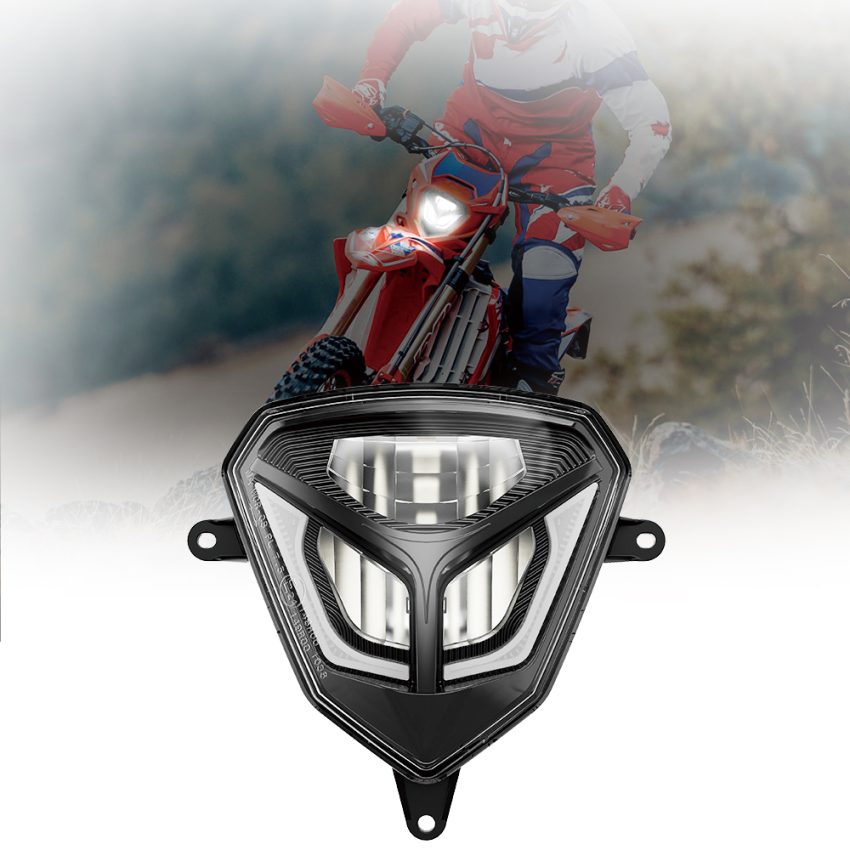
One system that shares the front end with the brakes and deserves a moment of attention during any upgrade is the headlight. The Beta RR headlight wiring and connector sit behind the front mask, in close proximity to the brake line and lever perch. Beta’s owner’s manuals describe the bulb replacement procedure in detail: release the spring washers, move the lamp holder cowl forward, disconnect the connector, and unhook the spring to remove the bulb—with the explicit warning not to touch the glass with bare fingers, as skin oils can compromise efficiency and shorten bulb life . When you are working on the master cylinder or routing a new brake line, take a moment to check that the headlight connector is clean and secure and that the wiring is properly clipped away from the fork tubes and brake hardware. A corroded connector or a chafed wire is easy to overlook until it fails on a night ride, and the access is never better than when the front end is already partially disassembled.
Putting It Together
A sensible upgrade sequence for most Beta RR owners is pads first, then rotor, then master cylinder. Fresh sintered off-road pads cost relatively little and deliver an immediate improvement in feel and consistency. A larger wave rotor adds fade resistance and power for riders who ride fast or load the front end heavily on descents. The radial master cylinder is the finishing touch for those who want the most refined lever feel and are prepared for the installation and bleeding process. Whichever combination you choose, verify fitment for your specific model year and fork specification, and bed the new pads in properly before judging the results.